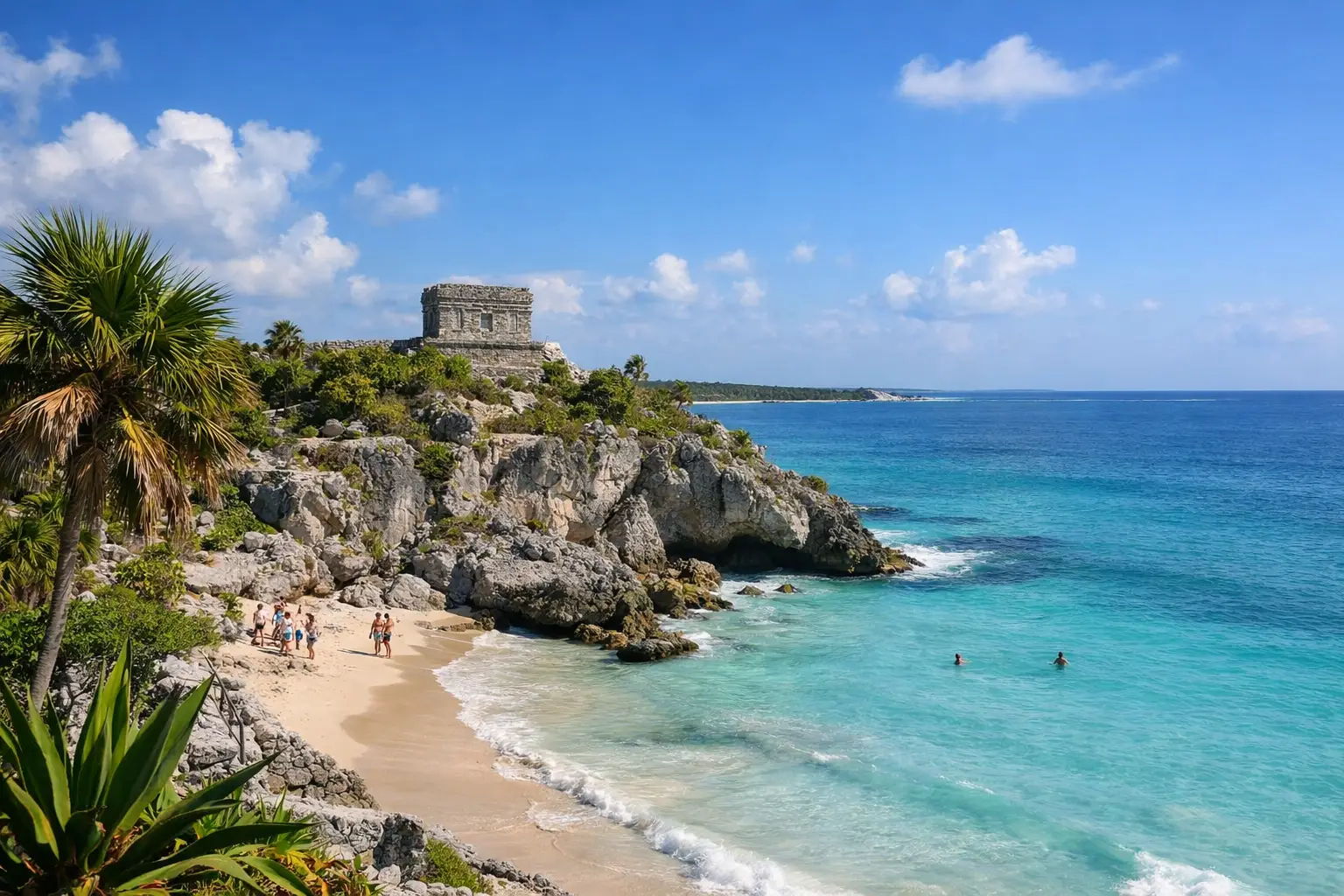
The version of Tulum you get in January is not the same Tulum you get in September. One feels polished, sunny, and social, with packed beach clubs and high room rates. The other can feel quieter, greener, and more relaxed, with afternoon rain that changes your plans but also lowers your costs. If you’re deciding when to visit Tulum, the best answer depends on what kind of trip you actually want.
Tulum is one of those destinations where timing shapes almost everything. Weather affects whether your days are built around the beach or cenote hopping. Seasonal demand changes hotel prices dramatically. Even the town’s mood shifts depending on whether you’re arriving during peak winter travel or late-summer humidity. That is why choosing your dates matters more here than in many beach destinations.
When to visit Tulum for the best weather
If weather is your top priority, the sweet spot is usually from late November through April. These months bring warm days, lower humidity, and less rain than summer and early fall. That means better conditions for beach time, biking around town, visiting ruins, and spending long afternoons outdoors without feeling completely drained by the heat.
January, February, and March are especially appealing for travelers coming from colder parts of the US. Expect sunny days, comfortable evenings, and water warm enough for swimming. This is the postcard version of Tulum that many travelers imagine before they book.
The trade-off is that everyone else wants that version too. Peak season brings higher nightly rates, more reservations needed, and busier stretches of beach. If you love lively energy, that may feel like part of the fun. If you want space and spontaneity, the same conditions can be frustrating.
April is often a smart middle ground. The weather is still attractive, but in some years the spring break rush starts to fade by late month. You may still see strong prices, though usually with a little more breathing room than midwinter.
The cheapest time to go
If budget matters most, look at the low season from roughly June through October. This is when you can often find better deals on hotels and sometimes on flights as well. Tulum becomes more attainable for travelers who want the experience without peak-season pricing.
There is a reason those prices drop. Summer and early fall bring heat, humidity, and a higher chance of rain. Hurricane season in the Caribbean runs from June through November, with the greatest weather risk generally falling between August and October. That does not mean every day is stormy, or that your trip will be washed out. It does mean you need flexibility and realistic expectations.
Low season can still be rewarding. Rain often comes in bursts rather than all-day downpours, and the jungle feels especially lush. Cenotes can be a refreshing break from the heat, and restaurants may be easier to enjoy without the wait times of winter. For some travelers, saving money and avoiding the biggest crowds more than makes up for a few weather interruptions.
Best time for fewer crowds
For a calmer atmosphere, the shoulder seasons usually win. May and early June can work well if you can handle rising heat. Late October and November can also be appealing as the rainy season begins to ease and the holiday crowds have not fully arrived.
These periods tend to offer a more balanced version of Tulum. You still get plenty of sunshine, but the pace can feel less intense. It is easier to imagine yourself lingering over breakfast, finding a quiet stretch of shoreline, or getting into a favorite restaurant without planning your whole day around reservations.
That said, shoulder season is not a secret anymore. Tulum has grown into a year-round destination, so “quiet” is relative. You may avoid the heaviest surge of winter visitors, but you should not expect the town to feel empty.
What each season feels like
Winter and early spring
From December through March, Tulum is at its most in-demand. The weather is reliably pleasant, especially compared with much of the US during those months. Beach days are easy, and evenings are comfortable enough for long dinners and rooftop drinks.
This is also when Tulum can feel most curated and social. Popular beach areas buzz with visitors, and the destination leans into its stylish side. If your ideal vacation includes vibrant restaurants, wellness experiences, and a lot of people out enjoying the same sunshine, winter is a strong fit.
The downside is cost. Hotels can jump significantly, and the best places book early. Traffic and beach congestion can also chip away at that laid-back image people often associate with Tulum.
Late spring
April and May are transitional months. The weather is still very good, but temperatures begin climbing. If you are sensitive to heat, midday outings may start to feel tougher, especially away from the water.
Still, late spring has a lot going for it. You can often catch a nice mix of good beach weather and slightly softer crowds. This can be an excellent time for travelers who want the visual appeal of Tulum without the full intensity of peak season.
Summer
June and July bring stronger heat and humidity. Afternoon rain becomes more common, though many days still include plenty of sun. This season can work well for travelers who plan to mix in indoor downtime, spa time, long lunches, and cooling swims in cenotes.
If you picture yourself doing all-day bike rides in the heat, summer may feel demanding. If you are happy moving slowly and adjusting plans around the weather, it can still be a very good trip.
Early fall
August through October is the trickiest stretch. It is often the wettest and most unpredictable part of the year, with hurricane-season concerns in the background. Prices can be tempting, and the lower demand may appeal to travelers who dislike crowds, but this is the time to book refundable options and stay flexible.
For some people, that uncertainty is worth the savings. For others, especially anyone planning a once-a-year vacation with little room for weather disappointment, it may not be the ideal window.
When to visit Tulum for beaches, cenotes, and ruins
If your trip is mostly about beaches, aim for January through April. You will have the best odds of clear skies, calmer conditions, and that easy beach rhythm people travel here for.
If cenotes are high on your list, almost any time of year can work. In hotter months, they are even more appealing because they offer a cool break from the humidity. Rain can affect your schedule, but it rarely removes cenotes from the picture entirely.
For visiting the Tulum ruins, weather matters more than many travelers expect. The site can feel hot and exposed by late morning, especially in warmer months. Cooler, drier months make a big difference, and an early start is always the better call. The same goes for walking or biking around town.
What about seaweed season?
Sargassum, or seaweed buildup, can affect Caribbean beaches in this region, and Tulum is no exception. It is most commonly an issue in spring and summer, though the timing and severity vary from year to year. Some days it is minor. In other periods, it can meaningfully change the beach experience.
This is one of the biggest reasons there is no single perfect answer to when to visit Tulum. You can plan for great weather and still run into seaweed. If beach quality is your top concern, winter months often give you better odds, but nothing is guaranteed.
The good news is that Tulum is more than its shoreline. Cenotes, food, wellness stays, nearby nature, and day trips all help round out the experience if beach conditions are not ideal.
So when is the best month?
For many travelers, February is the strongest all-around choice. The weather is excellent, rain risk is relatively low, and the overall experience feels easy. If money is less of a concern and you want Tulum at its most reliably beautiful, February is hard to argue against.
If you want a better balance between conditions and cost, late April or November may be more appealing. These months often offer enough good weather to feel rewarding without the full pressure of peak-season prices and crowds.
If saving money is the main goal, September can look attractive on paper, but it comes with the most weather uncertainty. It is best for flexible travelers who care more about value than perfect beach days.
The best time really comes down to your priorities. For classic sunshine and the easiest planning, choose winter. For a more balanced mix of price and comfort, aim for the shoulder season. For lower rates and a looser pace, take a chance on summer or early fall and build flexibility into your plans.
Tulum rewards travelers who match the season to the trip they want, not the trip they saw on someone else’s feed. Pick the version that fits your budget, your pace, and your tolerance for heat, and you’ll give yourself a much better chance of loving it.
Leave a Reply